Satisfaction guaranteed. Free shipping Australia wide for orders over $75.

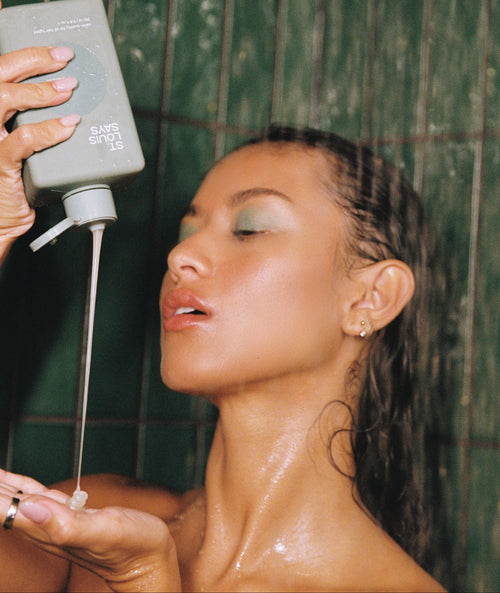

If you've been on TikTok, Instagram, or near a runway in the last six months, you've seen it. That impossibly smooth, light-reflective hair that looks like it's been lacquered. No frizz. No flyaways. Just pure, mirror-like shine that catches light the way glass does.
That's glass hair — and it's the dominant hair aesthetic of 2026.
It dominated London Fashion Week AW2026 across multiple shows. It's taken over social feeds. It's now the most-requested look in Australian salons. And for most people, the question isn't whether they want it — it's whether they can actually get it.
The honest answer: yes. But probably not the way you're trying.
What Glass Hair Actually Is
Glass hair is hair characterised by an almost liquid shine — a high-gloss, cuticle-smooth finish that reflects light uniformly along the length of the strand. Think of the difference between a polished marble surface and a rough one. Both are the same material. The difference is entirely in the surface.
Healthy hair with a smooth, sealed cuticle reflects light cleanly. Damaged, porous, or frizzy hair scatters light — which is why it looks dull, flat, or rough even when it's clean.
The glass hair look isn't a styling trick. It's a structural result. And that's why it can't be achieved with a serum applied on top of unhealthy hair. You can temporarily add surface gloss — but if the underlying hair shaft is compromised, it won't hold, it won't look right, and it won't last past the next wash.
The foundation for glass hair is built before you ever touch a styling product.
Why Most People Can't Fake It
Here's what's happening at a structural level when hair doesn't look glassy:
The hair cuticle — the overlapping scale-like outer layer of each strand — is raised rather than lying flat. This happens as a result of damage: heat styling, chemical processing, UV exposure, sulphate stripping, mechanical friction from rough towels or pillowcases. When the cuticle is raised, it scatters light instead of reflecting it, creating that dull, rough, frizzy appearance.
Applying a shine serum on top of a raised cuticle adds a temporary surface coat. It can look good for a few hours. But it doesn't seal the cuticle — it just fills the gaps temporarily — so it wears off, washes out, and needs to be reapplied constantly.
The stylists and editorial teams achieving glass hair on runways and in shoots are working with hair that's structurally healthy — smooth cuticle, good moisture retention, minimal porosity. That's what they're building toward in the chair, and it's what you need to build at home.
How to Actually Build Glass Hair
Step 1: Address moisture first
A dehydrated hair shaft cannot reflect light properly. Moisture is the baseline. If your hair is dry, brittle, or prone to frizz, no amount of finishing product will give you the glass effect — you'll get surface shine over a rough texture, which reads as product, not healthy hair.
The All Hail Hydration Moisture Repair Duo is the right starting point. Formulated for dry, damaged, and frizz-prone hair, it uses Quinoa Seed Extract, Soybean Oil, and Panthenol — ingredients that work at the hair shaft level to restore moisture and smooth the cuticle. Used consistently (not just once), it changes the baseline texture of your hair over 2–4 weeks.
Step 2: Repair structural damage weekly
If your hair has existing damage from heat, colour, or processing, a weekly treatment mask is non-negotiable. The cuticle needs repair, not just surface conditioning, before it can reflect light cleanly.
The Resurrection Repair Hair Treatment Mask is a concentrated weekly treatment that works on the structural integrity of the hair shaft. Use it once a week in place of conditioner — leave it for 5–10 minutes, rinse thoroughly. Within 3–4 weeks of consistent use, you'll notice a significant difference in shine, smoothness, and how your hair responds to styling.
Step 3: Start at the scalp
This is the step most glass hair tutorials skip, and it's the one that makes the difference long-term. A healthy scalp produces natural sebum — the oil that travels down the hair shaft and provides a natural conditioning layer that no product fully replicates. When the scalp is dry, inflamed, or stripped from over-washing, that natural oil production is disrupted, and hair loses its baseline moisture and shine.
Using a Scalp Massager during each wash stimulates circulation and sebum production, which helps restore the natural conditioning that's the foundation of genuinely glossy hair. It takes a few weeks to notice — but it's one of the most effective things you can do for long-term shine.
Step 4: Use less heat, differently
Glass hair and high heat are a trade-off. Every pass of a flat iron or blow dryer at excessive heat raises the cuticle further, counteracting the smoothness you're trying to build. That doesn't mean abandon heat styling — it means use it smarter.
The Infrared Thermal Brush ($115) uses infrared technology to dry and smooth hair from the inside out rather than blasting heat at the surface, which is significantly less damaging and produces a smoother, shinier result. For the glass hair finish specifically, drying with lower heat and finishing with a cool setting makes a meaningful difference to cuticle smoothness.
Step 5: Finish smart
Once your hair is structurally healthy, finishing products actually work. A lightweight shine serum or oil applied to smooth, hydrated hair seals an already-smooth cuticle rather than trying to compensate for a rough one. The result is genuinely glass-like — and it lasts.
What Glass Hair Is Not
It's not achievable overnight. If your hair is currently damaged, you're looking at 3–6 weeks of consistent product use before you see the foundation forming. That's not a product failure — that's how hair biology works. Damaged hair doesn't repair in one wash.
It's also not one-size-fits-all. Glass hair looks different on straight, wavy, and curly hair — and it should. The goal isn't poker-straight uniformity; it's whatever your hair's natural texture looks like with maximum shine and minimum frizz. Curly glass hair is a thing. Wavy glass hair is a thing. The principle is the same: healthy cuticle, proper moisture, structural integrity.
The trend is everywhere right now. But the way to get ahead of it isn't to buy more styling products. It's to fix the foundation — starting with what you put in your hair in the shower.
All St. Louis Says products are sulphate-free, paraben-free, vegan, and Australian-made on the Sunshine Coast.