Satisfaction guaranteed. Free shipping Australia wide for orders over $75.

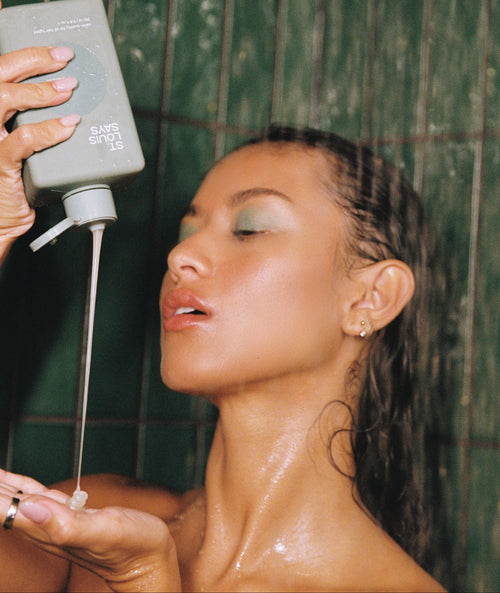

If you've been on TikTok recently, you've probably seen it: someone lying back in a salon chair, eyes closed, while a therapist works through an elaborate scalp ritual involving oils, massage, steam, and a level of relaxation that looks almost medicinal.
That's a head spa. And it's not just a TikTok moment — it's currently one of the most-searched hair treatments in the world, with 135,000 monthly searches and a waiting list at almost every salon in Australia that offers it.
Here's what it actually is, what it does for your hair and scalp, and how to get most of the benefit at home for a fraction of the cost.
What Is a Head Spa?
The head spa originated in Japan as a structured, multi-step scalp treatment that combines deep cleansing, exfoliation, scalp massage, and conditioning. Japanese haircare has long been grounded in the philosophy that the scalp is skin — and that healthy hair is only possible when the scalp beneath it is properly cared for.
In a professional setting, a full head spa typically runs 60–90 minutes and involves scalp analysis, a pre-treatment oil or serum application, massage, steam or warm towel treatment, a targeted shampoo and conditioning sequence, and a finishing treatment. The experience is as much about the nervous system as it is about the hair — the combination of pressure, warmth, and rhythm triggers a parasympathetic response that genuinely reduces stress.
That matters for hair health in ways that aren't immediately obvious. Chronic stress is one of the most significant triggers for hair loss and shedding — specifically the type called telogen effluvium, where stress pushes follicles prematurely into the resting phase. A head spa addresses the scalp health and the stress driver simultaneously.
What the Research Actually Shows
This isn't just wellness marketing. A landmark study published in PubMed followed participants through 24 weeks of standardised scalp massage and found a statistically significant increase in hair strand thickness — achieved through physical stimulation alone, not topical treatment. The mechanism is straightforward: consistent mechanical pressure on the scalp increases blood circulation to the follicles, which improves the delivery of oxygen and nutrients that hair growth requires.
Separate research has confirmed that scalp massage reduces levels of stress hormones including cortisol, which is directly linked to hair shedding. The physical benefit and the stress-reduction benefit compound each other — which is why the results from consistent head spa practice are meaningful and sustained, not just cosmetic.
Why It's Trending in Australia Right Now
The head spa sits at the intersection of two major consumer shifts: the skinification of haircare (treating the scalp the same way you treat your face) and the broader wellness movement that's turned self-care rituals into a priority rather than a luxury.
Australian salons offering the treatment are fully booked weeks in advance. And because the full salon version typically costs $150–$300 per session, there's enormous demand for a quality at-home version that captures the key steps.
The good news: the most effective parts of a head spa are entirely reproducible at home.
How to Do a Head Spa at Home
This is a weekly ritual — not a daily wash. Set aside 30–40 minutes. The difference between a head spa and a regular wash is intention, pressure, timing, and sequence.
Step 1: Dry scalp massage (5 minutes, before washing)
Before getting your hair wet, use a Scalp Massager to work through your dry scalp in slow, circular motions — from the nape of the neck upward, then across the crown, then around the hairline. Apply firm but comfortable pressure.
This pre-wash massage does two things: it loosens any product buildup or dead skin at the scalp before shampooing (making the cleanse more effective), and it stimulates blood flow to the follicles before any product is applied. Five minutes is enough. You'll feel the difference in scalp warmth immediately.
Step 2: Choose the right shampoo for your scalp
The cleansing step in a head spa is slower and more deliberate than a regular wash. Apply your shampoo to a wet scalp and work it through with the Scalp Massager rather than your fingernails — the silicone bristles apply even pressure without scratching or causing micro-abrasion.
Which shampoo depends on your primary scalp concern:
- Dry or sensitive scalp: All Hail Hydration Moisture Repair Shampoo — gentle, sulphate-free, hydrating without stripping.
- Dandruff or excess oil: Scalp Salvation Anti-Dandruff Shampoo — contains Piroctone Olamine and Salicylic Acid to treat the root cause while cleansing.
- Thinning or hair loss: Eternal Boost Advanced Stimulating Shampoo — formulated with Procapil and Rosemary Extract to stimulate the follicle during the wash step.
- Fine or flat hair: Almighty Volume Thickening Shampoo — builds body and lift from the root without product residue.
Leave the shampoo on for 2–3 minutes rather than rinsing immediately. Let the active ingredients do their work.
Step 3: The treatment mask (10 minutes)
On head spa days, skip your regular conditioner and use the Resurrection Repair Hair Treatment Mask instead. Apply from mid-length to ends, then clip your hair up and leave it for a full 10 minutes.
This is the repair step — while the mask is working, the rest of the ritual continues. If you have a warm towel or can run warm water over your hair before applying (warm temperature helps the cuticle open and absorb treatment more effectively), do that first.
Step 4: Wet scalp massage (3 minutes, while mask processes)
While the mask is sitting, use the Scalp Massager again on your wet scalp — same circular motions, working from the nape up. The combination of warm water and massage pressure at this stage drives circulation further and helps the shampoo's active ingredients absorb.
This is the step that makes the biggest difference to how the ritual feels. Three minutes of consistent, firm scalp massage with warm water running is genuinely relaxing in a way that a 30-second regular wash isn't.
Step 5: Cool rinse and finish
Rinse the treatment mask with the coolest water you can comfortably manage. Cool water closes the cuticle after treatment — locking moisture in and leaving hair noticeably smoother and shinier than a hot rinse would. Even 30 seconds of cool rinsing at the end makes a visible difference.
Follow with your regular conditioner on the lengths if needed, or apply the matching conditioner from your shampoo's duo.
How Often to Do It
Once a week is ideal. The scalp benefits — improved circulation, reduced oil overproduction, dandruff management — compound with consistency. Most people notice a significant difference in scalp comfort, hair texture, and baseline shine within 3–4 weeks of weekly practice.
The full salon treatment is worth doing occasionally for the professional scalp analysis and the complete experience. But the at-home version, done consistently, delivers most of the functional benefit at a fraction of the cost.
The One Tool That Makes It Work
Everything above can technically be done with your hands. But the St. Louis Says Scalp Massager at $18 makes a meaningful difference to both the effectiveness and the experience. The silicone bristles apply even pressure across the scalp, reach areas that fingers don't, and create the kind of sustained mechanical stimulation that actually improves circulation — rather than the inconsistent pressure of fingertip massage.
It's the lowest-cost, highest-impact addition to any haircare routine, and it's the product that makes the head spa ritual genuinely reproducible at home.
All St. Louis Says products are sulphate-free, paraben-free, vegan, and Australian-made on the Sunshine Coast.